01
Prepping the base for flat, low ground
We shape and pack the base over the peninsula's flat, sandy soil so the slab spreads weight evenly and will not settle once the load lands, even on stretches where groundwater runs near the surface.
A pad cut to whatever rests on it and built for the soil beneath: borne by structural fiber and welded wire mesh for the load, and drained so a high water table and storm rain leave it be, pool decks and waterfront pads included.
Credibility comes from how it's built, not from promises. Here's the order of operations on every concrete pads & slabs job.
We shape and pack the base over the peninsula's flat, sandy soil so the slab spreads weight evenly and will not settle once the load lands, even on stretches where groundwater runs near the surface.
Slab depth follows whatever sits on top. The pad under a garden shed and the floor under a shop full of vehicles are two different pours, not one pour at two sizes.
The everyday pad here carries structural fiber and welded wire mesh, which is how Florida flatwork is reinforced. We bring in a steel rebar grid only when the load turns genuinely heavy or structural, since that is the work rebar exists for, not a light residential pad parked in twin-coast salt air.
On enclosed or conditioned slabs we lay a vapor barrier against the moisture a high water table drives up, and on waterfront and pool-deck work we grade the surroundings so storm water and splash-out shed off rather than soaking into the base.
We place the mix, score the control joints, and cure with peninsula heat and humidity in mind so the slab sets evenly clear across the surface.
Most contractors vanish after the deposit. We pick up the phone, show up when we say, and stand behind the work after the truck leaves. The follow-through is the difference.
A foreman we know runs your job and a vetted crew does the work, managed by Lucky's, one company accountable from the first call to the final walkthrough.
COI and lien waivers on file before we break ground. The documentation that lets commercial clients pay and gives homeowners peace of mind.
Prepped subgrade, reinforced and mixed to spec for the job, and proper curing. We build credibility through the process, not promises. On concrete pads & slabs, that starts with prepping the base for flat, low ground.
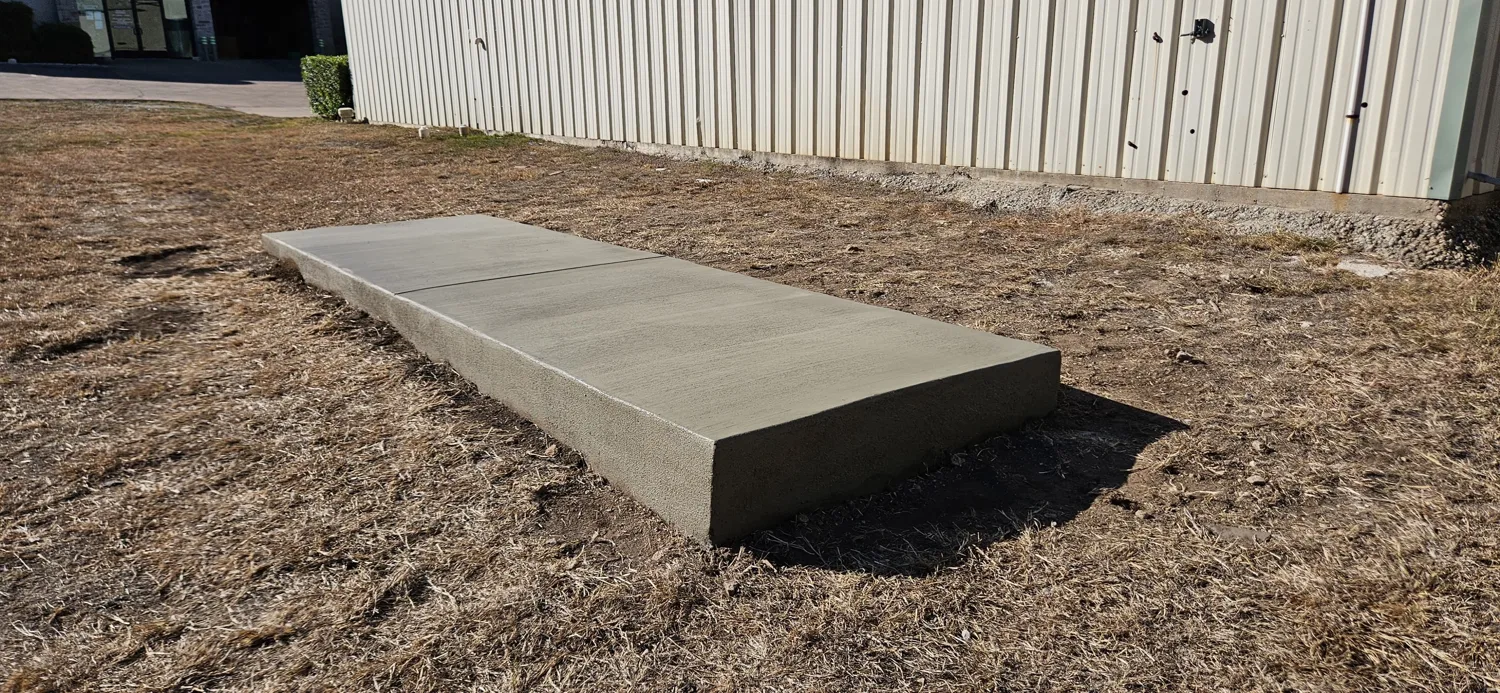
A pad's price answers to the load and the soil: reinforcement keyed to the use, a tamped base above a high water table, and a grade that carries water off. As a starting band, most pads and slabs sit around $7 to $13 per square foot, shifting with thickness and whether a vapor barrier figures in. We size and bill it against the load that pad has to bear.
On a typical residential pad we fold structural fiber into the batch and run welded wire mesh through the slab, which is the standard Florida flatwork build. When the load goes genuinely heavy or structural, a shop floor that parks trucks being the plain case, we lay in a steel rebar grid, because hauling that weight is precisely rebar's purpose. We size the reinforcement to the load in front of us rather than stuffing a light pad with steel that only hands corrosion more to find in salt off the bay and the Gulf.
Depends on the weight overhead. A shed pad bears a sliver of what a garage or shop floor under vehicles and gear has to hold, so we key the thickness and the reinforcement to your real use and reckon with the sandy ground and high water table underneath.
Yes. Each of those drops a heavy load onto a tight footprint, so we deepen the pour and beef up the reinforcement, reaching for rebar once the weight truly warrants it. A hot tub also needs a level base that will not budge as the sandy ground wets and dries, which makes drainage matter every bit as much as the steel. Name the equipment and we build the pad around it.
Yes, and a lot of our slab work on the peninsula is exactly that. A pool deck wants a slip-aware finish, a slope that carries splash-out and storm rain off, and reinforcement that shrugs off the constant damp, while a waterfront pad near a seawall gets a base set for the high water table right at the shoreline. We build both to the spot they sit in.
Some do, depending on size, placement, and use, and the rules vary across the City of St. Petersburg and the surrounding Pinellas County jurisdictions. We flag when a permit looks likely so it gets squared away early rather than turning up mid-job.
You'll hear back from a real person, usually the same day. No call center, no runaround, no chasing us down.
Booking up fast this season. Or call (727) 615-5553